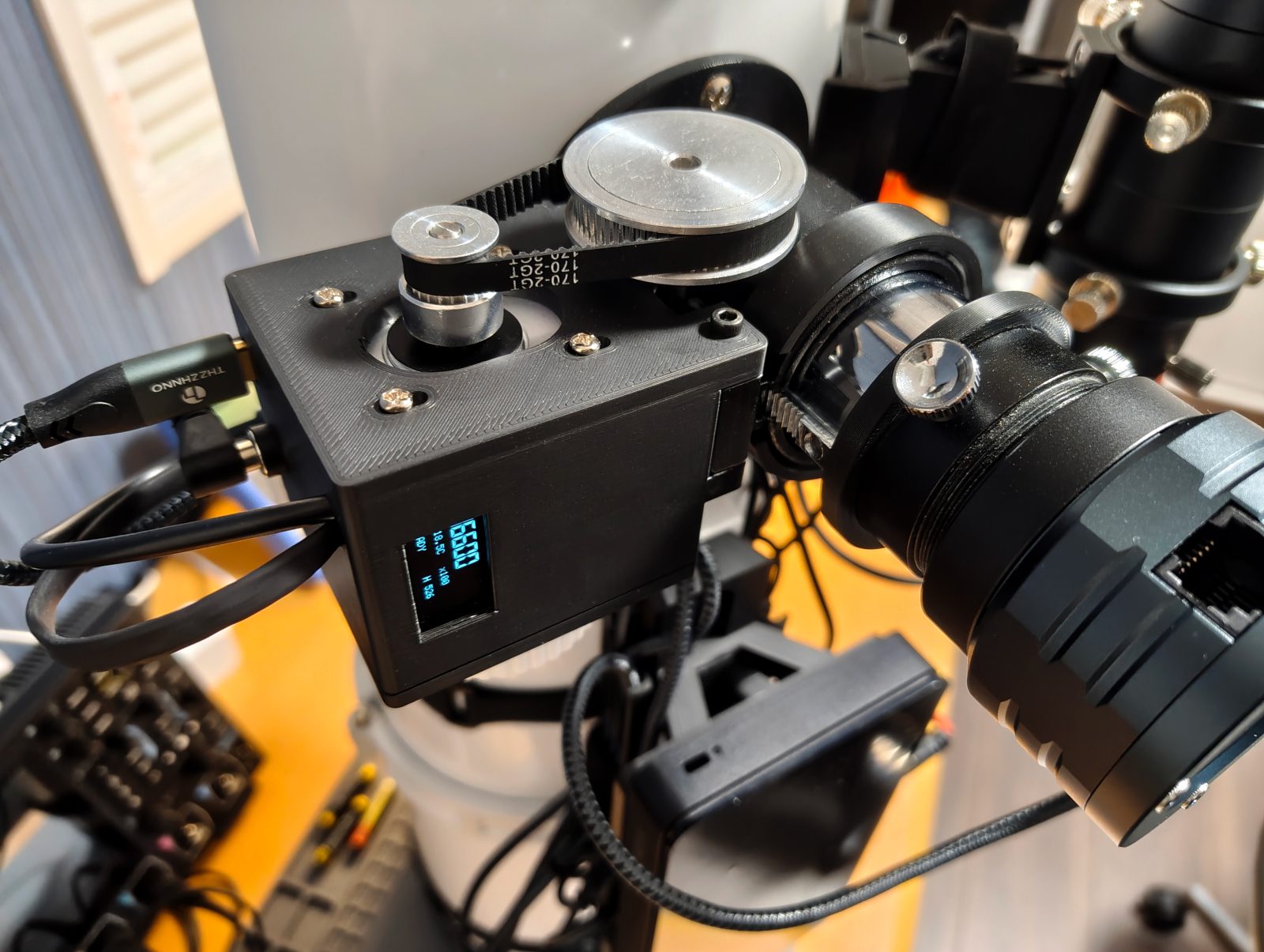
In development: the prototype works, and the custom PCB is being manufactured.
If you've ever tried to focus an R130Sf with a camera attached, you know the problem. The stock focuser gives you almost no fine control, and just touching the knob shakes the image you're trying to judge.
pd|F (PD Focuser) is my answer to that: a motorized focuser for the Vixen R130Sf. The prototype has been in use on my own scope, and a dedicated controller board is now being manufactured.
The problem with the stock focuser
The R130Sf is a great budget scope, but the rack-and-pinion focuser is where you can tell it's a budget scope. The gearing is rough, so there's no real fine focus: small adjustments are hard to make precisely. On top of that, the factory grease turns tacky over the years, and the movement gets stickier and rougher with age.
For visual observing, you can live with it. You're at the eyepiece while you adjust, so you can feel your way to focus. With a camera attached, for EAA or astrophotography, it's a different story. Small changes are hard to judge on a screen, and every touch of the knob wobbles the image.
What I tried first
I tried a helicoid focuser, but with my SV705C camera installed, the extra length meant the scope could no longer reach focus. So I made a set of larger focus knobs, which helped a lot. (Those knobs will get their own post.) Naturally, that got me wondering how far I could take it.
My first plan was a direct-drive motor. I ended up with a stepper motor and a 3:1 belt reduction for finer steps. The goal wasn't just to hit focus once, but to land on it consistently, session after session.
More than a motorized knob
While digging into PC control and the MoonLite focuser protocol, I realized there was no reason to build this for photography alone. I wanted it to stay on the scope for visual nights too.
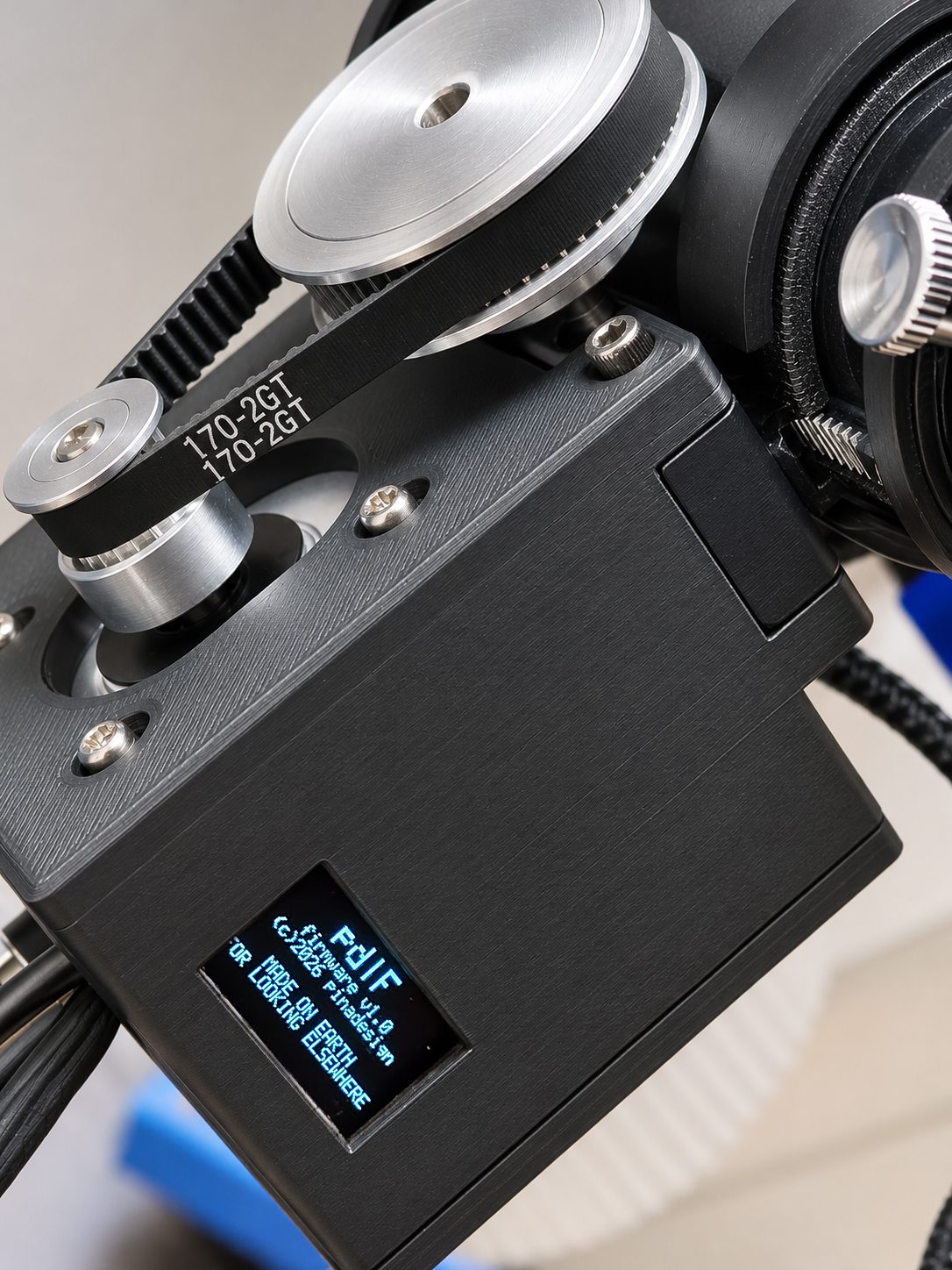
Without a computer, using the built-in OLED display and rotary encoder:
- Three programmable focus positions, with save and recall
- User-set zero and maximum travel
- Homing to a reference position, and returning to where you left off
- Parking the drawtube inward for transport
- Settings for motor torque, freewheel and the display
With a computer, it speaks ASCOM, so software like SharpCap can control it directly.
It also monitors temperature. Readings show on the display, and they're passed to your software over ASCOM, so a capture program that supports it can automatically run a refocus when the temperature shifts by an amount you set. The new PCB adds connections for two temperature probes, one for the optical tube and one for the ambient air, so you can also watch how the scope cools relative to the night around it.
From prototype to PCB
The prototype proved the idea, but I didn't want the permanent version to be a box of dev boards and jumper wires. So I designed a compact controller PCB in KiCad, partly to tidy up my own setup, and partly with an eye to making pd|F available to other owners.
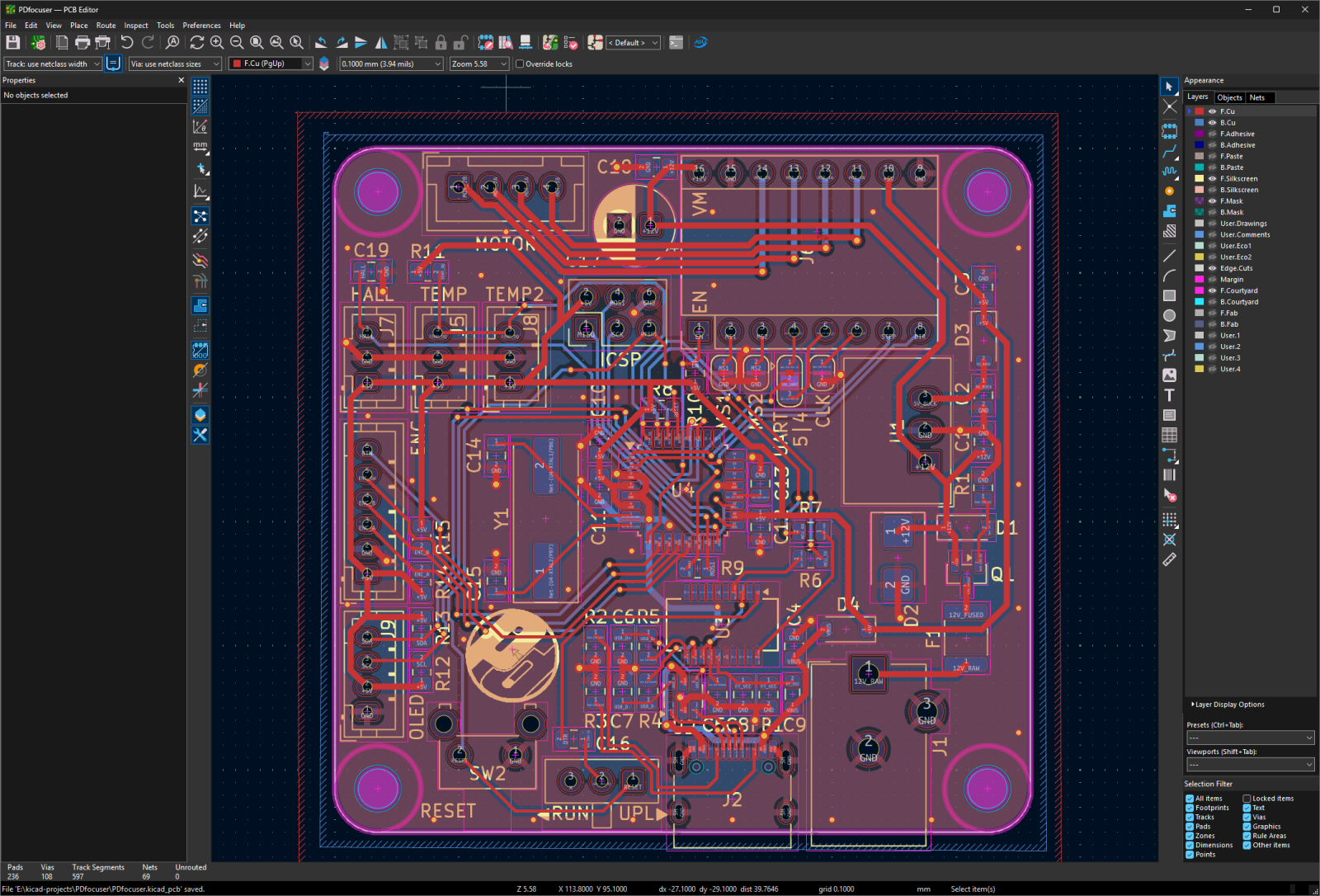
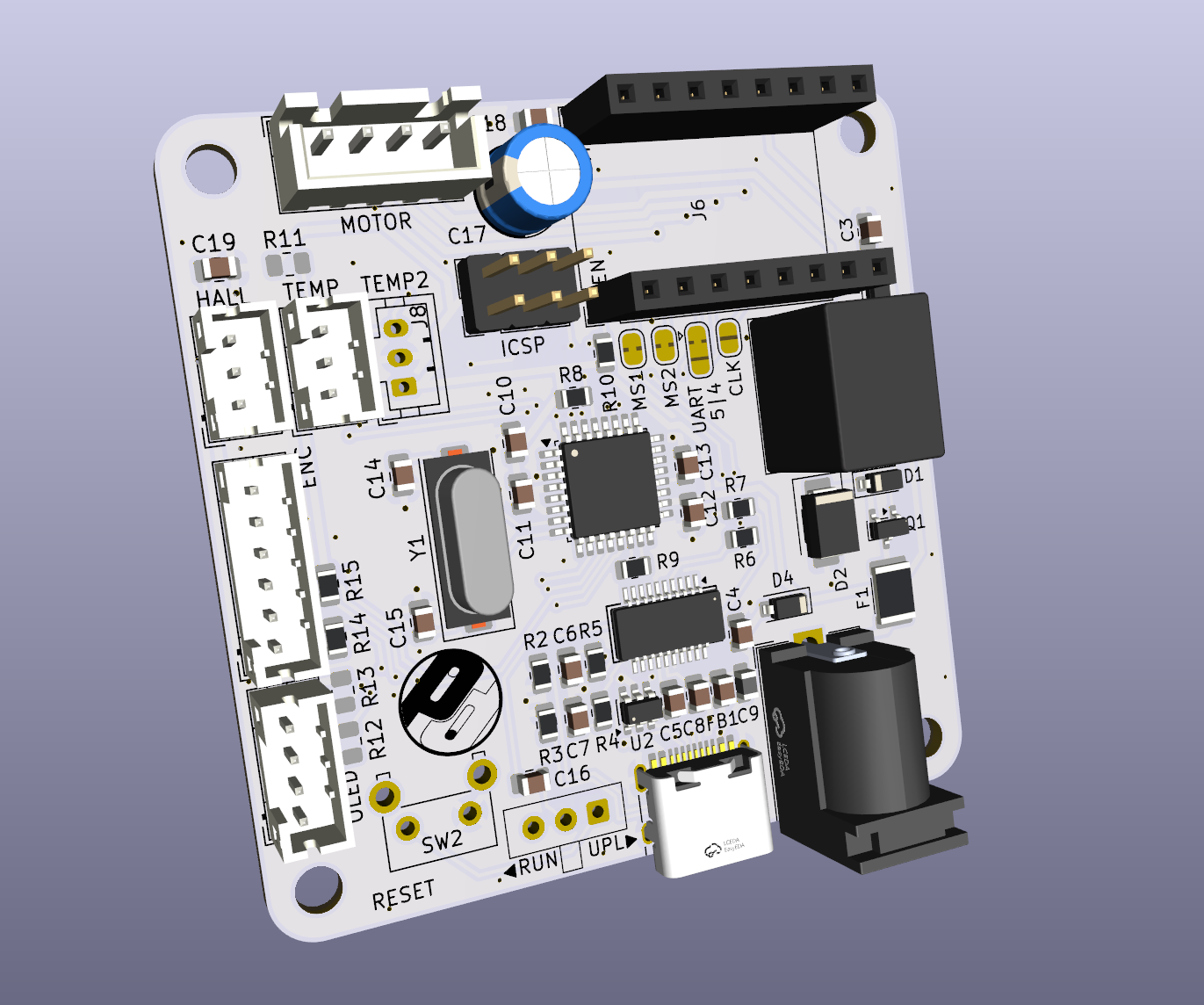
The R130Sf mounting bracket uses the focuser's existing attachment points, so there's no major surgery on the telescope. Fair warning, though: installing the motor kit means removing both focus knobs from the pinion shaft, and they are on very tight. (That's a story for another post.) Down the line, I'd like to offer a drop-in replacement pinion and gear set, so the upgrade becomes a straight parts swap with no changes to the original parts.
I'd also like to offer the controller board on its own, for anyone building their own focusing system.
There's a small inscription on the back of the board:
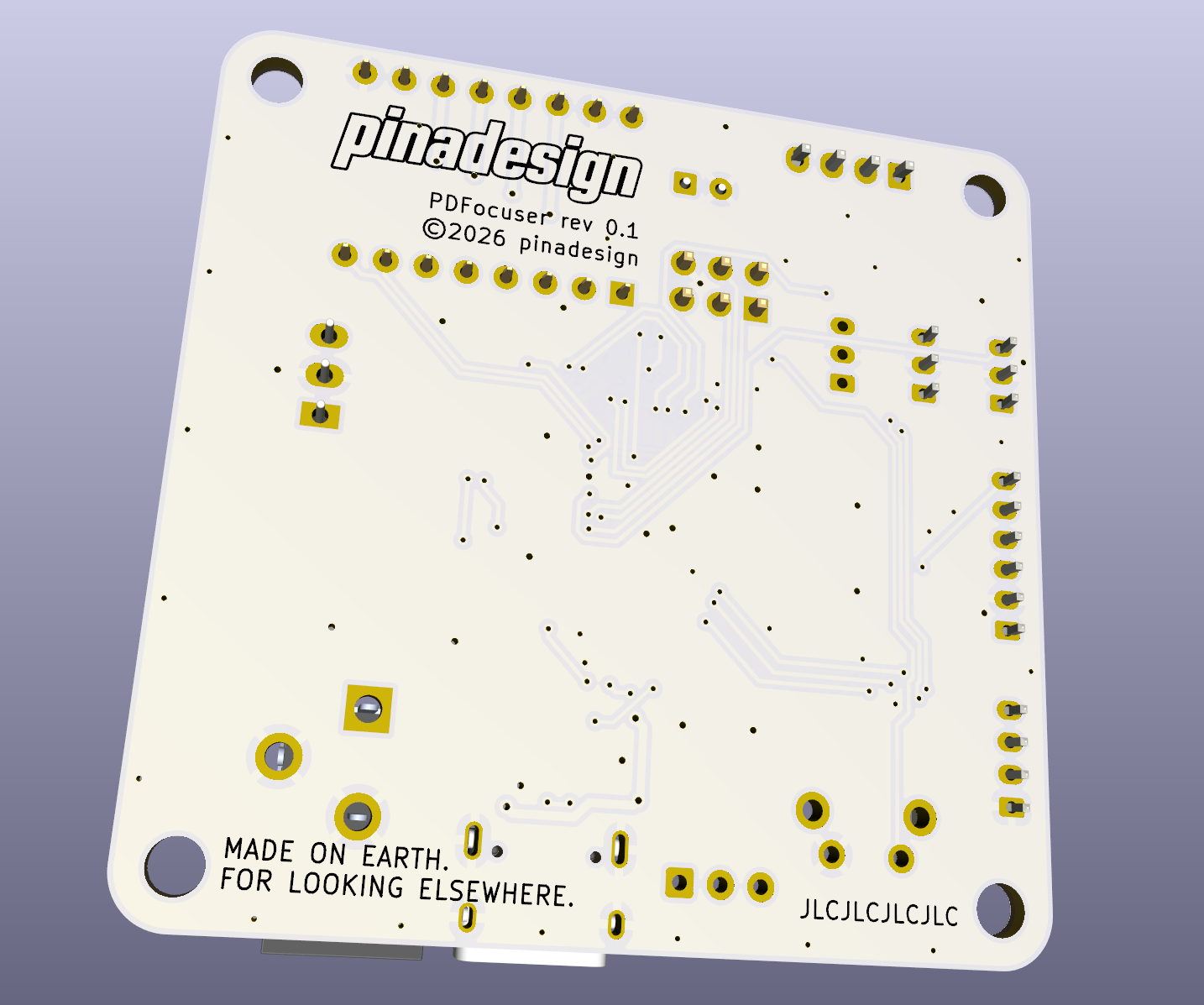
Made on Earth. For looking elsewhere.
It seemed appropriate.
What's next
The first batch of PCBs has been ordered, with part of the assembly done at the factory. When they arrive, I'll finish assembling them, bring them up, and test them against the working prototype. I'll write that up when it happens.
pd|F isn't for sale yet. The goal is to make precise motorized focusing an affordable upgrade for R130Sf owners, and maybe a handy controller for other DIY builds too. If that sounds like something you'd want on your scope, let me know. Hearing from interested owners helps shape what the finished version looks like.